Most people think secondary colors are fixed. Orange is orange. Green is green. Purple is purple.
That assumption causes a lot of design mistakes.
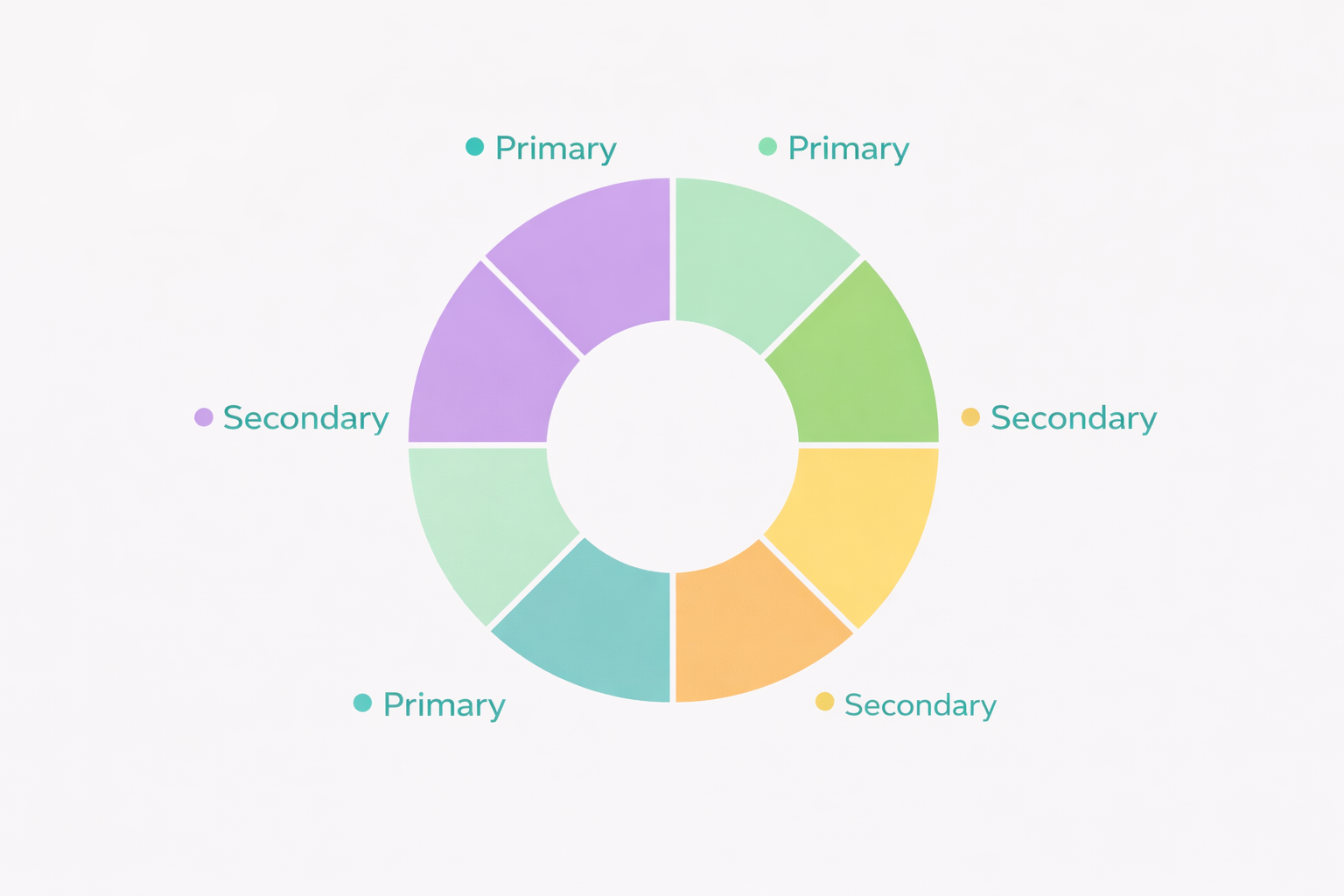
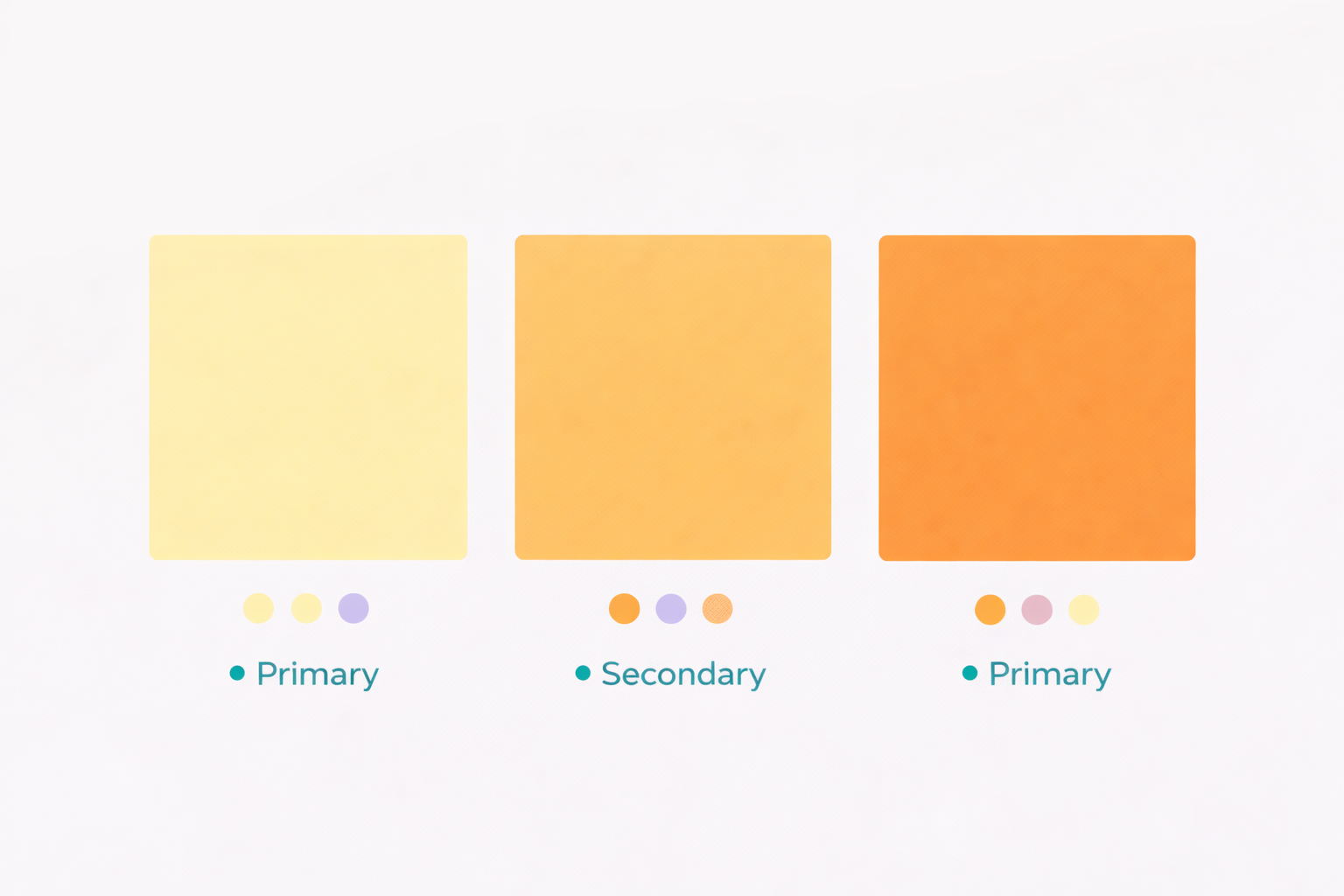
In reality, the ratio between the two primary colors completely changes how a secondary color feels and behaves in a design.
Let’s break it down in a way that actually matters for designers.
The Three Core Secondary Colors
| Primary Mix |
Secondary Color |
What Designers Should Know |
| Red + Yellow |
Orange |
Controls urgency vs friendliness |
| Yellow + Blue |
Green |
Balances energy and calm |
| Red + Blue |
Purple |
Shifts between boldness and depth |
But the real power comes from how much of each color you use.
Orange: Energy With Control
Orange is a mix of red’s urgency and yellow’s optimism.
- More red → feels urgent, aggressive, action-driven
- More yellow → feels friendly, inviting, accessible
This is why many checkout buttons use softer oranges instead of pure red. You get attention without pressure.
Green: Calm That Still Moves
Green blends yellow’s brightness with blue’s stability.
- More yellow → energetic, fresh, youthful
- More blue → calm, trustworthy, professional
This is why fintech apps often use blue-leaning greens, while wellness brands lean toward yellow-green tones.
Same color family. Very different emotional outcome.
Purple: Depth Without Distance
Purple combines red’s intensity with blue’s logic.
- More red → expressive, creative, bold
- More blue → thoughtful, premium, composed
This is why purple works so well for brands that want to signal creativity without losing credibility.
Why This Matters in Real Design Systems
Here’s the thing most teams overlook:
Users don’t react to color names.
They react to temperature, weight, and contrast.
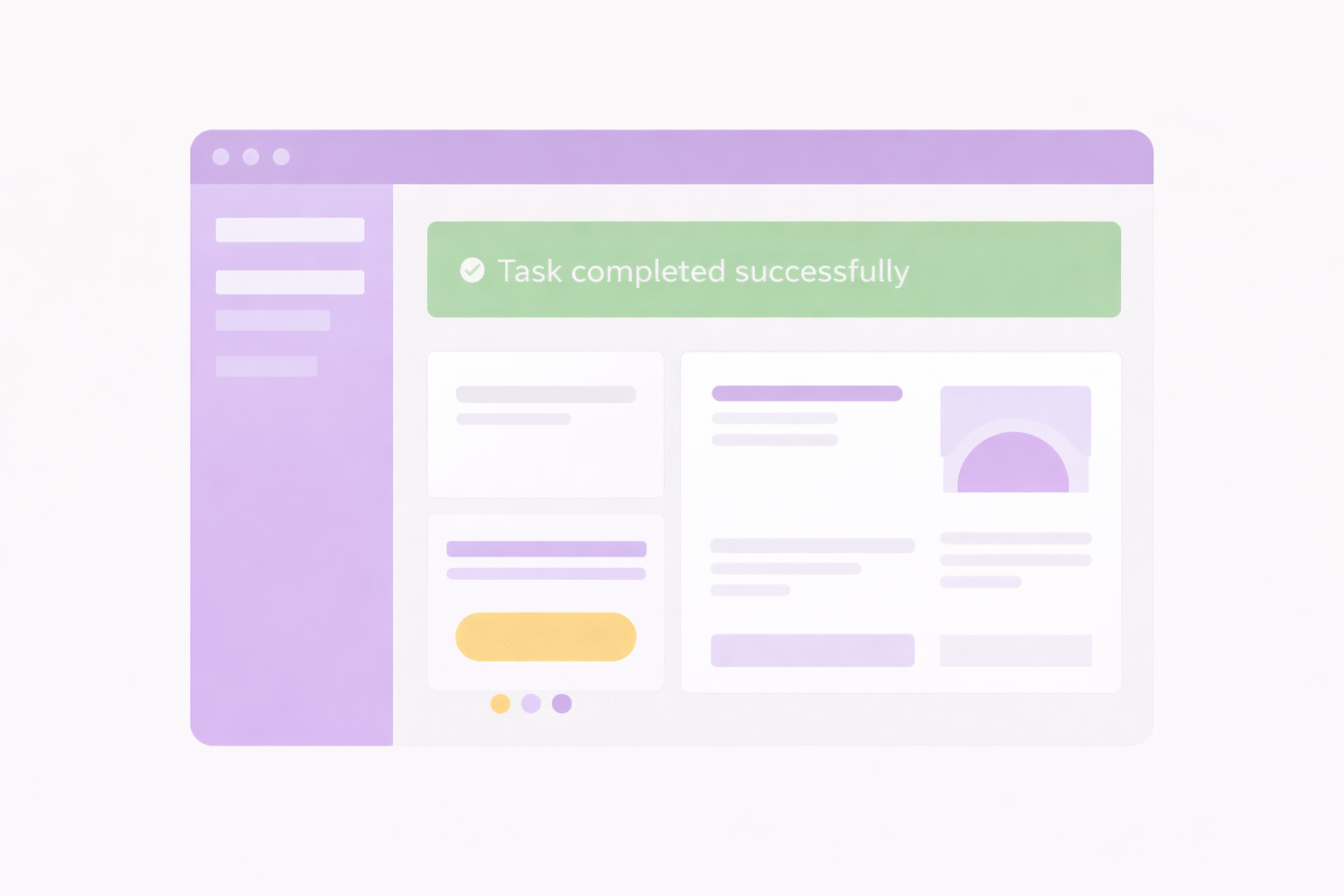
A green success state can feel:
- Reassuring
- Neutral
- Or even stressful
All depending on the mix.
Design systems that feel polished aren’t using more colors. They’re using better ratios.
Common Mistake to Avoid
Many designers:
- Pick secondary colors from a palette tool
- Apply them everywhere at full strength
That’s how designs become loud.
Strong systems instead:
- Adjust saturation and warmth
- Use secondary colors sparingly
- Let them support, not compete
This is where amateur design turns professional.