White-label development is emerging as a strategic growth model for US agencies, driven by the need for faster delivery, specialized skills, and cost predictability. It enables agencies to scale their operations without increasing headcount, offering a competitive edge in the market.
Why White-Label Development Is Growing Among US Agencies
Published on: 1 April 2026
Last updated on: 1 April 2026
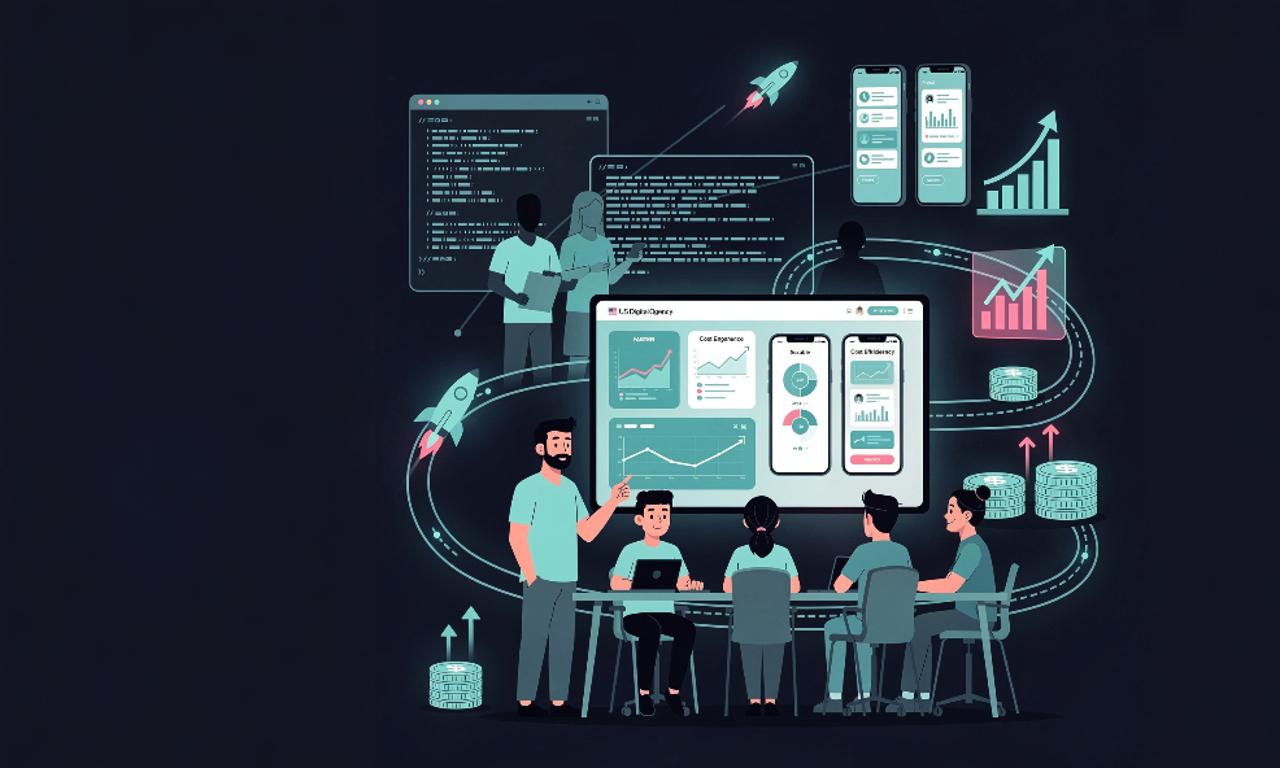
The US digital agency landscape is undergoing a quiet but transformative revolution, one that is redefining how services are delivered without adding headcount.
White-label development, once considered a niche workaround, is now a mainstream growth strategy for agencies of all sizes.
As client demands intensify and talent shortages persist, more agencies are turning to white-label partners to stay competitive without sacrificing quality.
The demand gap agencies can't ignore
US agencies are caught in a paradox: client expectations for digital products have never been higher, yet the domestic developer talent pool has never been more contested.
According to the US Bureau of Labor Statistics software developer employment is projected to grow 25% through 2032, far outpacing the average for all occupations.
Recruiting, onboarding, and retaining senior engineers is increasingly time-consuming and expensive, especially for boutique and mid-size agencies competing with Big Tech compensation packages.
White-label development solves this by giving agencies instant access to pre-vetted, cross-functional engineering teams, without the overhead of employment. An agency can pitch a complex e-commerce platform, a custom SaaS dashboard, or a cross-platform mobile app and deliver it entirely under its own brand, with the technical execution handled by a trusted partner like Mediusware's white-label development services.
According to Reid Hoffman, Co-founder of LinkedIn,
The future of work is not about having everyone in-house. It's about building an ecosystem of partners who give you capabilities you couldn't afford to maintain yourself.
Cost efficiency that changes the business model
For many US agencies, white-label development is less about convenience and more about survival margins. Forbes reports that agencies leveraging offshore white-label partners can reduce project delivery costs by 30–50% compared to domestic hiring, without touching quality, provided the right vetting process is in place.
Those savings are either passed to clients as a competitive pricing advantage or retained as margin.
Consider a typical agency scenario: a digital marketing firm wins a $120,000 web application contract. Building it in-house would require hiring two additional developers at $90K–$120K annually each.
Partnering with a white-label provider converts that fixed cost to a variable one, scalable per project, without long-term liability. This shift from CAPEX to OPEX thinking is a core reason the model is accelerating across the industry.
According to Clutch's 2024 outsourcing report,
The top three reasons US agencies choose white-label partners are: faster delivery, access to specialized skills, and cost predictability in that order.
.jpg)
Maintaining brand trust while outsourcing execution
A persistent concern among agency owners is client perception: will clients find out? Will quality suffer? The answer largely depends on partner selection and process design.
Leading white-label firms operate as invisible infrastructure, NDA-bound, brand-agnostic, and deeply integrated into the agency's project management workflows.
From the client's perspective, every line of code, every Figma handoff, every sprint review is branded as the agency's own work.
David C. Baker, Agency Business Strategist & Author of The Business of Expertise, says,
Transparency with your client about the outcome matters far more than transparency about the process. They hired you for results.
Agencies that invest in clear communication frameworks, defined quality checkpoints, and structured handoff protocols consistently report high client satisfaction, regardless of whether the development was done in-house or by a white-label partner.
The model works when processes work. Explore how Mediusware's dedicated development teams integrate seamlessly with agency workflows to ensure zero client-side disruption.
The competitive pressure to adopt now
Perhaps the most compelling reason agencies are adopting white-label development at record pace is the competitive pressure from their peers.
Agencies that have already integrated this model are bidding on larger contracts, delivering faster, and winning on price, while agencies relying solely on in-house talent are increasingly priced out or outpaced.
Statista places the global IT outsourcing market at over $617 billion in 2025, reflecting just how normalized white-label and outsourced development has become across industries.
Furthermore, as McKinsey Digital notes, the agencies most likely to thrive in the next decade are those that "focus relentlessly on their core differentiator", which for most is client strategy, creative direction, and relationship management, not software engineering execution. White-label development is the operational model that makes that strategic focus possible.
Final Thoughts
White-label development is no longer a stopgap, it is a deliberate, strategic architecture for sustainable agency growth.
As the model matures and global development partners become more sophisticated, the agencies that embrace it early will widen their competitive lead over those still trying to build every capability in-house.
The question for US agency leaders is no longer whether to integrate white-label development, but how quickly they can make it work for their clients.
Ready to Scale Your Agency Without Scaling Your Headcount? Partner with Mediusware's white-label development team to deliver more, win bigger projects, and protect your margins, all under your own brand. Talk to Our Team.

I work with founders and leadership teams when growth moves faster than their systems, teams, or decisions. I’ve led 850+ projects for 750+ clients across 20+ countries, working across 100+ technologies and counting. I care about ownership, clarity, and building things that last beyond the launch.
Featureblogs
Relatedblogs
01The Hidden Cost of Understaffed Development Teams02Why Scaling Engineering Teams Internally Is Slower Than You Think03Why Many Digital Agencies Eventually Need a Development Partner04How Agencies Maintain Delivery Speed While Growing Client Demand05Why Agencies Lose Clients Because of Development Delay
Authorblogs
01The Real Cost of Building an In-House Development Team for Agencies02The Hidden Risks of Relying on Freelance Developers for Agency Projects03Top Software Companies in New York04Why Agencies Should Stop Relying on Rockstar Developers and Build Systems Instead05Why Agencies Lose Clients Because of Development Delay