- Legacy systems don’t fail, they quietly slow growth with rigid workflows and manual processes.
- Intelligent agents enhance systems by automating decisions, unifying data, and enabling real time insights.
- Smart modernization is not rebuilding everything, but layering intelligence to evolve systems without risk.
How Intelligent Agents Are Transforming Legacy Systems
Published on: 26 February 2026
Last updated on: 11 June 2026
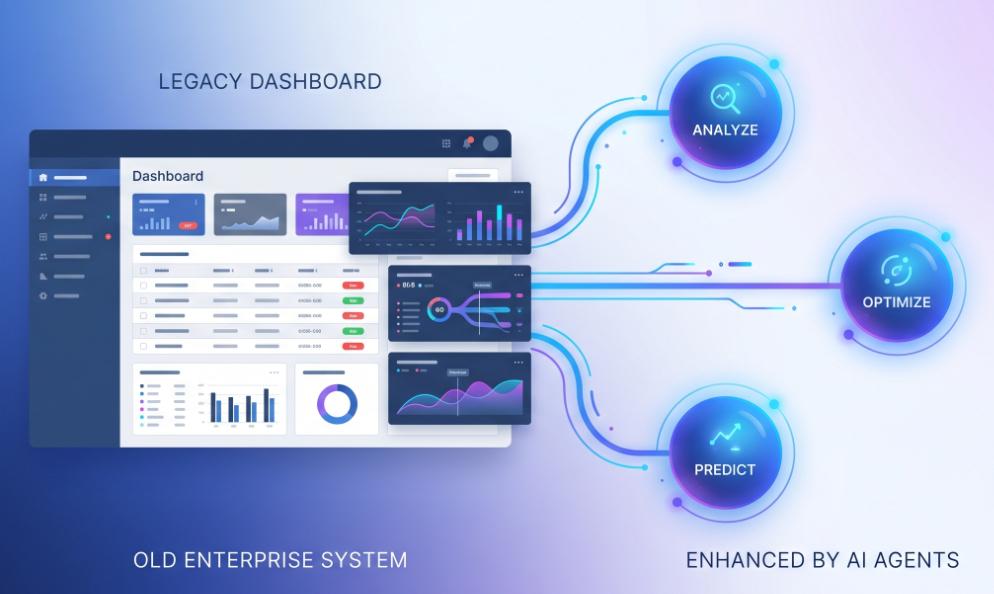
The Quiet Problem with Legacy Systems Is
Legacy systems rarely break.
They slow down.
Approvals take longer. Reports lag behind reality. Data lives in silos. Teams depend on manual workarounds just to keep things running.
From the outside, everything looks stable. Inside, growth is being resisted.
We’ve seen this pattern repeatedly. The real issue isn’t outdated code. It’s outdated workflows embedded inside systems that were never designed for today’s speed.
Why Legacy Systems Are Hard to Replace
Legacy systems carry more than software. They carry years of operational logic.
- Business rules built over decades
- Workflows tied to real-world operations
- Institutional knowledge held by teams
Replacing them isn’t just technical. It’s organizational risk.
Legacy modernization projects often fail not because of technology, but because of complexity and resistance to change.
According to Gartner, over 70% of digital transformation initiatives fail to meet their goals due to integration challenges and internal friction.
The Real Limitation Isn’t Age, It’s Rigidity
Most legacy systems struggle because they:
- Depend on manual decision-making
- Lack real-time insights
- Resist integration with modern tools
- Fragment data across departments
A full rebuild sounds logical.
In reality, it’s slow, expensive, and often fails before delivering ROI.
What Are Intelligent Agents in Legacy Systems?
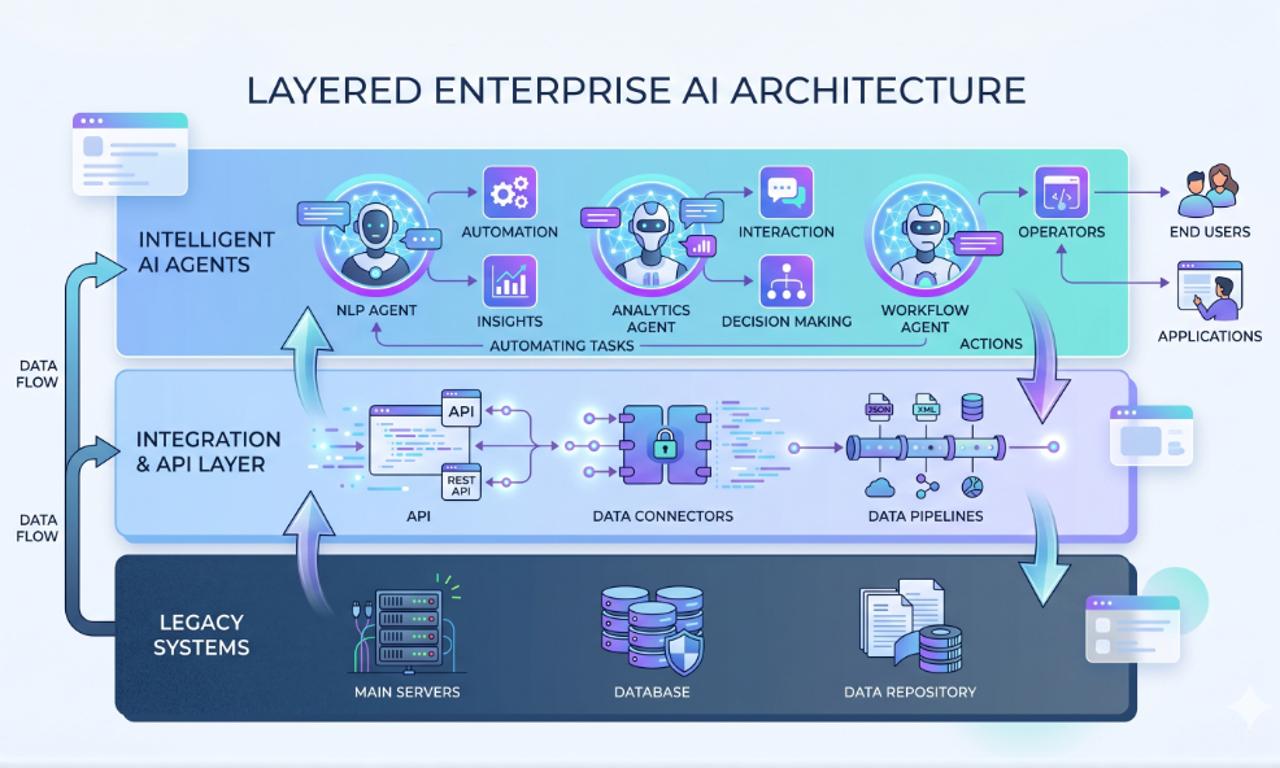
Intelligent agents are AI-driven systems that sit on top of existing infrastructure.
They don’t replace systems. They enhance them.
They can:
- Observe workflows
- Interpret structured and unstructured data
- Make decisions based on rules and learning
- Trigger automated actions
Unlike traditional automation, they adapt.
They learn patterns. They improve over time. They reduce dependency on human intervention.
Why Traditional Modernization Approaches Fail?
Most companies follow this path:
| Step | What Happens |
| 1 | Decide to modernize |
| 2 | Plan full system replacement |
| 3 | Budget increases |
| 4 | Timeline expands |
| 5 | Internal resistance grows |
| 6 | Scope gets reduced |
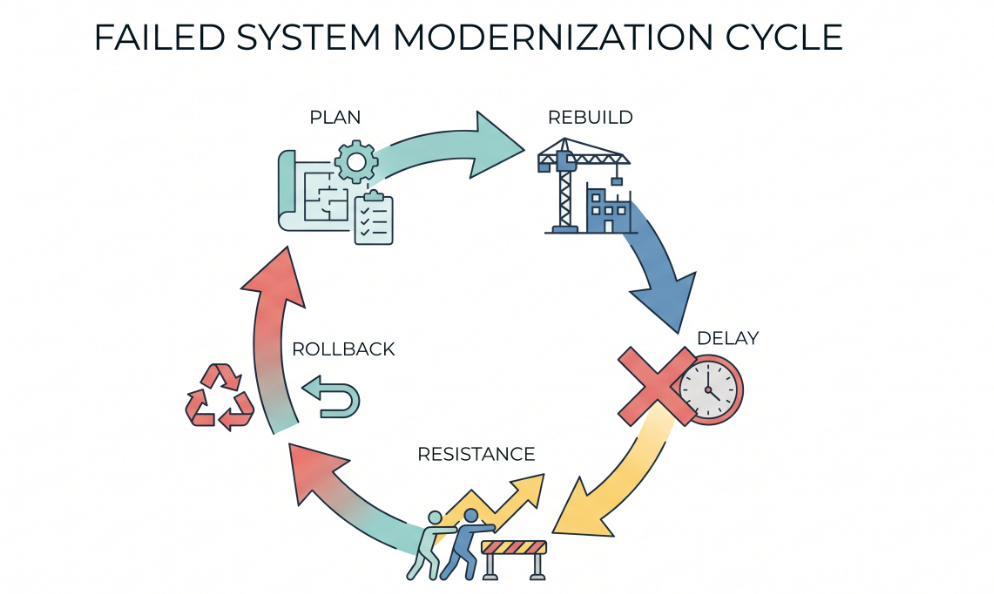
Result?
A partial upgrade that solves little.
The problem isn’t ambition. It’s approach.
How Intelligent Agents Actually Transform Legacy Systems
1. Automating Repetitive Decisions
In many enterprise systems, teams manually review approvals daily.
Agents can:
- Learn approval patterns
- Auto-approve low-risk actions
- Flag anomalies
Result: Faster processing without touching core architecture.
We’ve seen similar outcomes in platforms like CRM Runner, where automation reduced manual operations and improved decision speed.
2. Creating a Unified Data Layer
Legacy systems often store fragmented data.
Agents can:
- Pull data from multiple sources
- Normalize it
- Deliver real-time dashboards
Instead of rebuilding reporting systems, intelligence sits between systems.
3. Enabling Predictive Intelligence
Legacy systems are reactive.
Agents introduce:
- Demand forecasting
- Risk prediction
- Fraud detection
- Maintenance alerts
According to McKinsey, AI-driven automation can reduce operational costs by up to 30%.
This is not optimization. It’s structural improvement.
4. Reducing Cognitive Load on Teams
Teams often deal with:
- Too many alerts
- Too many reports
- Too many manual checks
Agents filter noise.
They highlight what matters.
They reduce decision fatigue.
In systems like Lensix, AI-driven insights reduced manual security effort while improving accuracy.
The Strategic Shift: Augment, Don’t Replace
After years of working with enterprise systems, one pattern is clear:
The best transformations don’t start with replacement.
They start with augmentation.
Intelligent agents allow organizations to:
- Preserve existing system value
- Extend system lifespan
- Introduce AI gradually
- Control modernization costs
This is how transformation becomes sustainable.
Common Misconceptions About Intelligent Agents
1. We need full cloud migration first.
Not necessarily. Agents can work in hybrid environments.
2. AI requires perfect data.
No. Agents can start rule-based and evolve.
3. Our system is too old.
If it has data access, it can be enhanced.
The real limitation is rarely technology.
It’s mindset.
When Should You Consider Intelligent Agents?
You should seriously evaluate this approach if:
- Your system slows down as you grow
- Teams rely heavily on manual decisions
- Reporting takes too long
- Data exists but insights are missing
- Full replacement is too risky
Frequently Asked Questions
No. They enhance and extend existing systems.

I work at the point where product decisions, system architecture, and engineering execution meet. At Mediusware, I’m accountable for how technology choices affect reliability, scale, and long-term delivery for our clients.
Featureblogs
Relatedblogs
Authorblogs
01
How Digital Agencies Can Deliver Custom Software Without Hiring Developers02
AI in FinTech: Build, Buy, or Integrate? A Founder's Decision Framework03
The Real Reason SaaS MVPs Miss Launch Deadlines04
How Seed-Stage SaaS Teams Add Engineering Capacity Without Hiring Chaos05
Why Seed-Stage SaaS Startups Struggle to Ship Fast