A SaaS MVP is a simple version of your product with only the core features needed to solve one main problem.
- Prioritize core MVP features to avoid overbuilding and launch faster.
- Use MoSCoW method to build less, validate quickly, and save resources.
Published on: 7 May 2026
Last updated on: 10 June 2026
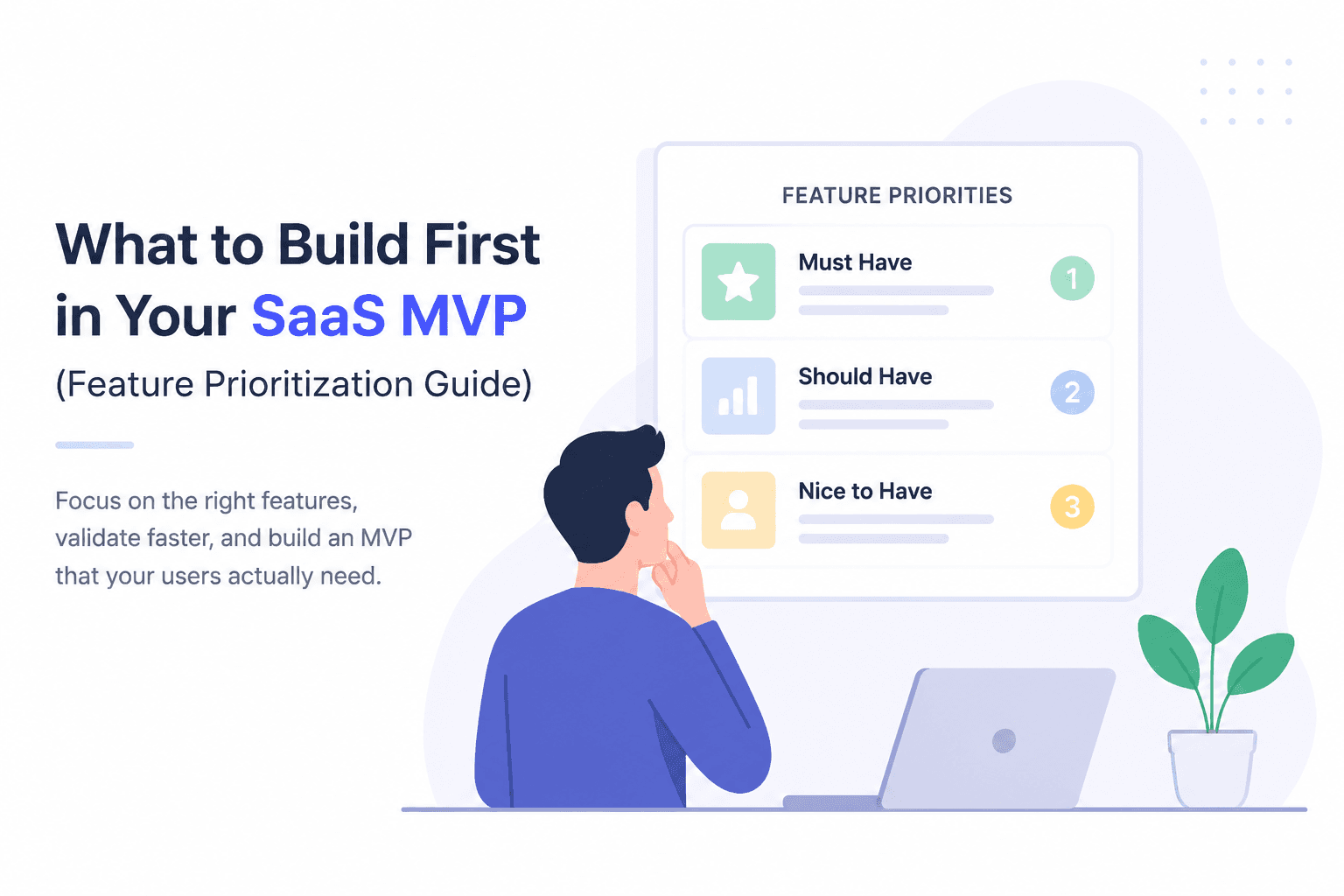
As a SaaS founder, you're eager to launch your product and make a meaningful impact in your industry.
But before you dive into development, there's a crucial question you must answer:
What features should you build first?
The truth is, building an MVP (Minimum Viable Product) is all about focus. It’s tempting to include every shiny feature you've dreamed of, but doing so can lead to feature bloat, wasted resources, and delays in getting to market.
In this guide, we'll walk you through a proven feature prioritization framework to help you focus on what matters most, ensuring that your MVP delivers value to your users without overbuilding.
Many startups fall into the trap of trying to pack every feature they think their users might want into their MVP.
But this usually creates more problems than progress.
Instead of launching fast, learning from users, and improving the product, founders often spend months building features that may never get used.
If you’re planning to build a minimum viable product, your first goal should not be perfection.
Your first goal should be validation.
This is why working with an experienced custom software development team can help founders separate what is essential from what can wait.
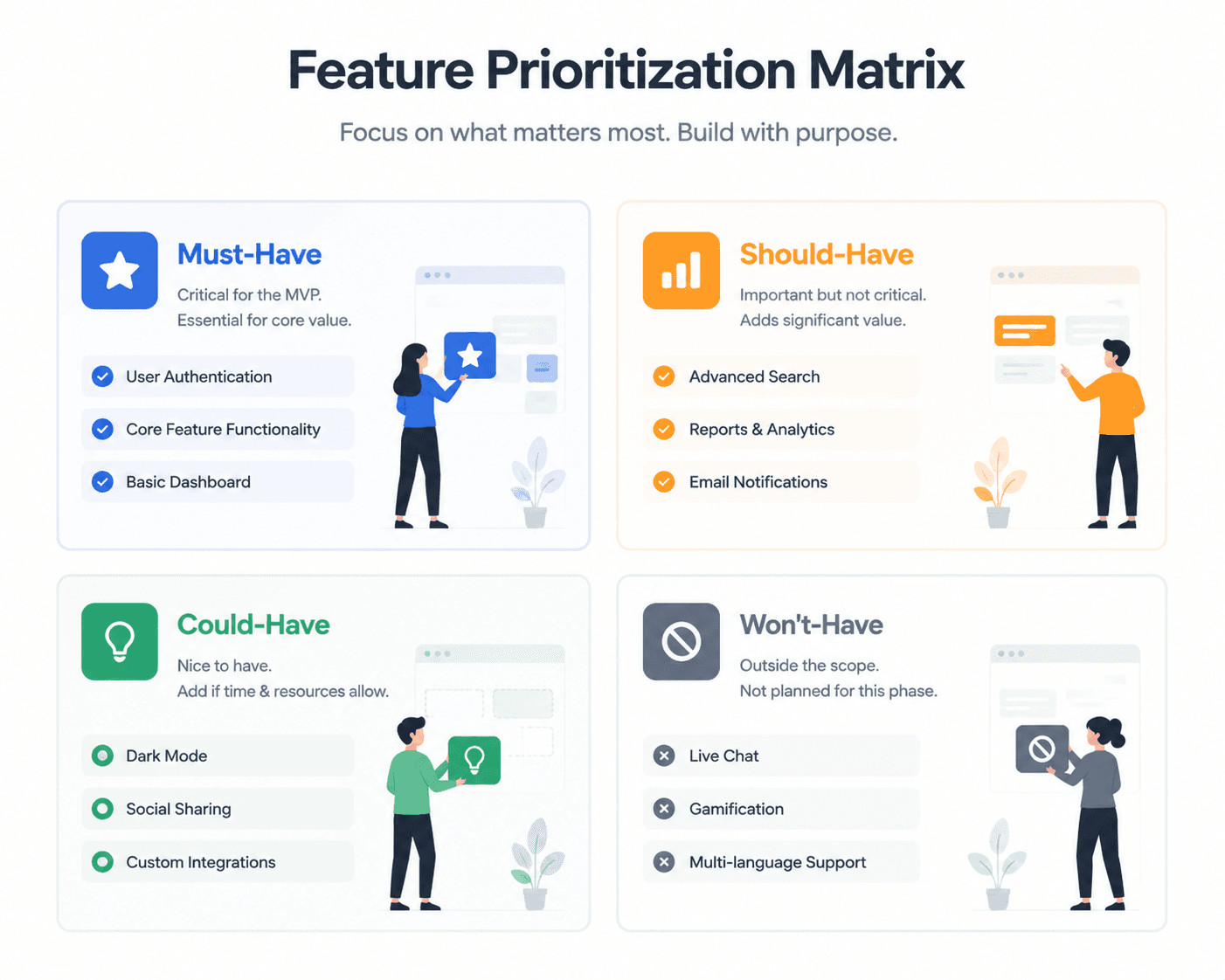
One of the most effective ways to prioritize features is to use the MoSCoW prioritization Method.
This approach helps you categorize your features into four distinct buckets:
These features are non-negotiable. Without them, your MVP won’t function or meet the core problem you're solving. Think of them as the foundation upon which your product is built.
Should-have features improve the product experience, but your MVP can still work without them.
These features are useful, but they should come after your must-have features.
These features can make your SaaS more useful, but they should not delay your launch.
If your core SaaS product already solves the main user problem, you can add these features in the next iteration.
For founders building long-term SaaS products, a clear SaaS development strategy helps decide what should go into version one and what belongs in future releases.
Could-have features are optional.
They may improve the product, but they are not essential for early validation.
These features should only be built if you have extra time, budget, and technical capacity after completing the must-have and should-have features.
Could-have features can be valuable later, but they should not distract your team during MVP development.
At this stage, your focus should be on usability, clarity, and core value.
Good UI/UX design can help you make even a lean MVP feel simple, useful, and easy to navigate without adding unnecessary features.
Won’t-have features are not bad ideas.
They are just not right for the MVP stage.
These are usually features that sound exciting but do not provide immediate value to early users.
According to the Agile Business Consortium’s MoSCoW prioritisation guide, this category helps teams stay realistic about scope and avoid unnecessary complexity.
For SaaS founders, this is important because every extra feature adds time, cost, testing, and maintenance.
The key to a successful SaaS MVP is lean development, building just enough to solve the core problem, validate the product-market fit, and get valuable feedback.
Here’s why this approach works:
A lean MVP allows you to get real feedback from users quickly. By launching a simplified version of your product, you can learn what users truly care about and iterate based on that feedback.
You’ll avoid spending excessive time or money on features that may never get used. Instead, focus on building only what’s necessary for your first users.
By getting user feedback early, you can decide whether to pivot your product or continue building along the same lines.
This feedback loop ensures that you build what users actually want and not just what you think they need.
Let’s look at a few real-world examples to illustrate how effective prioritization can lead to success:
Dropbox is a classic example of a SaaS MVP done right. Rather than building a fully-fledged file-sharing platform with all the bells and whistles, Dropbox focused on its core feature: cloud storage.
They built a simple, functional MVP and validated the concept with early adopters, which helped them grow into the powerhouse they are today.
Airbnb started as a simple platform that allowed people to rent out their apartments. They focused on solving one core user problem: finding short-term rental options.
It wasn’t until after they gained traction that they began adding more features like ratings, advanced search options, and multiple booking types.
These examples show that prioritizing core functionality and validating with real users first led to the growth and scaling of both companies.
At Mediusware, we help SaaS founders prioritize the right features for their MVP.
Our team works closely with you to:
What Our Clients Say About Working with Mediusware.
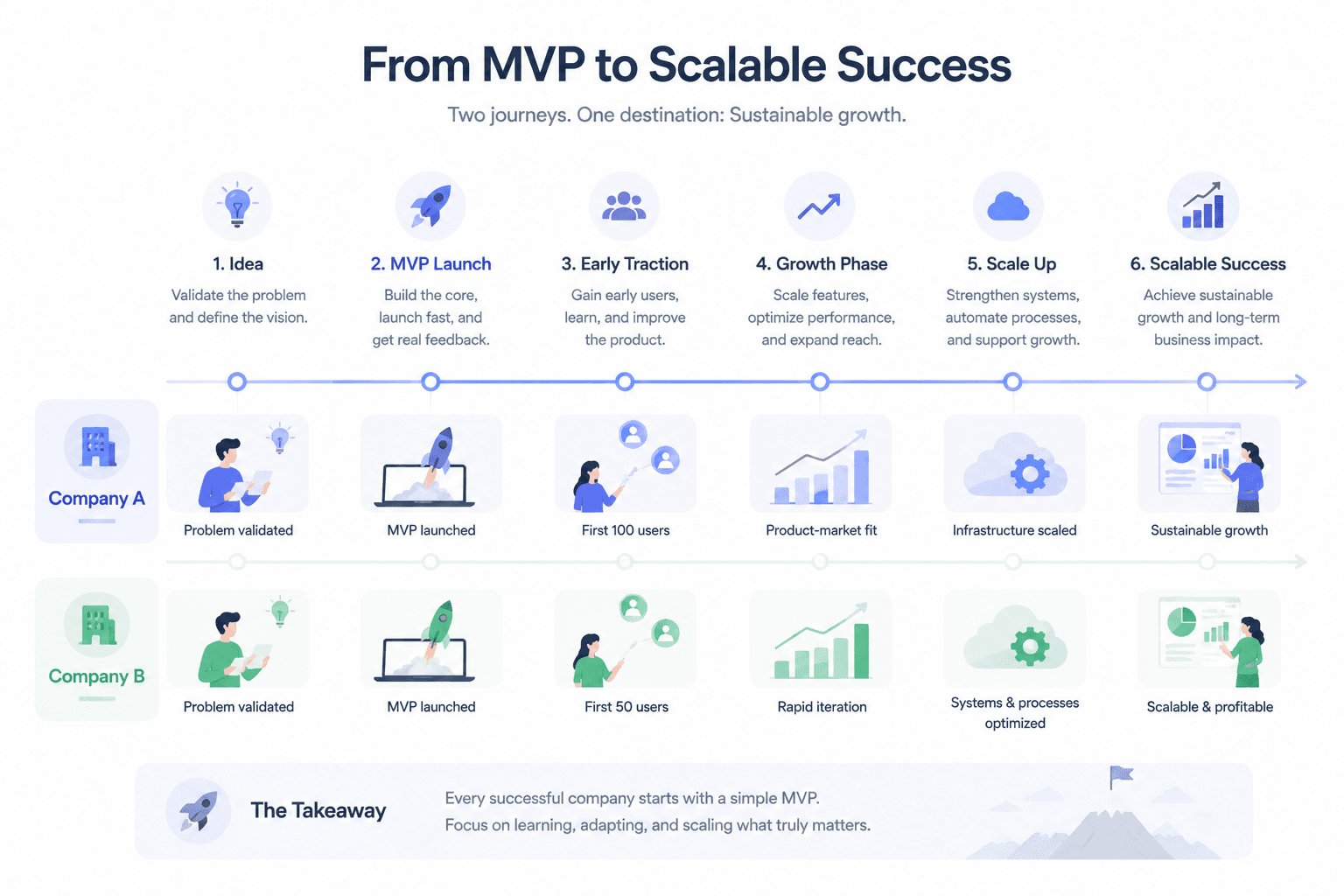
Your MVP does not need to be perfect. It needs to solve the core problem clearly.
By prioritizing features using the MoSCoW method and focusing on lean MVP development, you can get to market faster and validate your ideas with real feedback.
The journey to a successful SaaS product starts with smart prioritization. Focus on solving the problem that matters most, and build your product step by step.
A SaaS MVP is a simple version of your product with only the core features needed to solve one main problem.