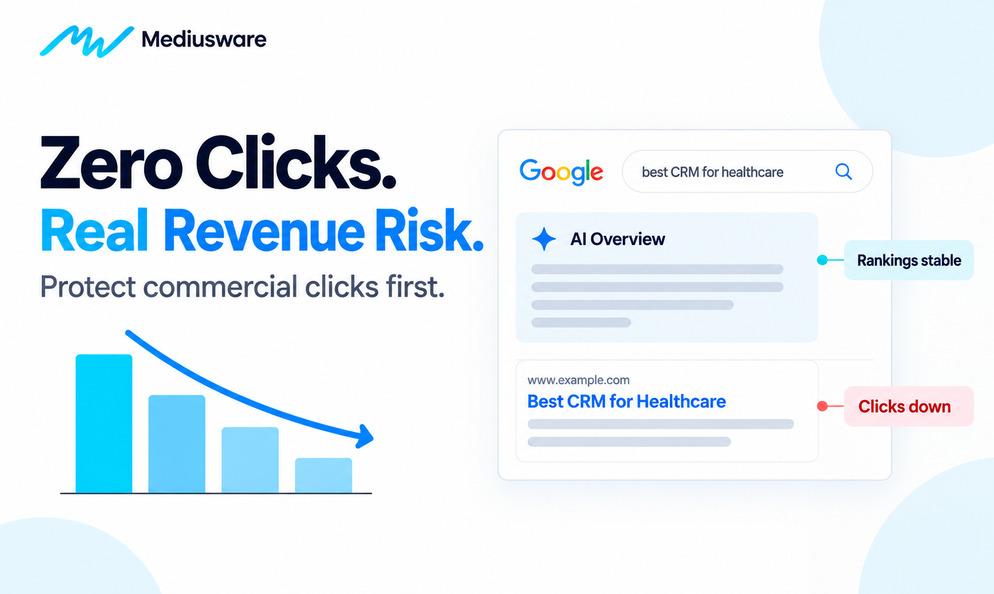
You cannot force Google to send every searcher to your website. But, you can give searchers stronger reasons to choose you when a click is necessary.
1. Publish valuable content hard to replace
Google's guidance for generative search emphasizes valuable, unique, non-commodity content. It specifically encourages original points of view, firsthand experience, useful structure, and content that adds something beyond what a generative system could easily reproduce from existing pages.
That means more, original data, project experience, expert judgment, frameworks, comparisons, real examples, useful tools, and evidence.
2. Make commercial pages worth visiting
A buyer comparing vendors usually needs details an AI summary cannot fully replace.
Give them, clear process, pricing context, trade-offs, timelines, relevant case studies, implementation details, comparisons, risks, proof, and answers to real sales questions.
For companies trying to connect search visibility with qualified leads and revenue.
3. Build demand for your brand
Generic search visibility can introduce a company. Brand demand makes it easier to find again.
Watch whether your search strategy is increasing:
branded queries, direct visits, return visitors, case-study views, service-page visits, and assisted conversions.
The click may happen later than it used to. That does not mean the earlier visibility had no value.
4. Connect informational content to buying decisions
An informational article should not become a dead end.
The path can look like:
Educational article → commercial comparison → case study → service page → conversation
Internal linking matters because it helps both readers and search engines understand where a topic leads next. Do not add links simply to hit a quota.
Link when the next page answers the reader's next logical question.
5. Protect high-intent searches across channels
SEO does not have to carry every commercial query alone.
If a strategically important SERP becomes crowded with AI features, paid search can help maintain visibility while organic performance evolves.
The same rule applies there: optimize for actions and revenue, not clicks. Our guide to high-converting Google Ads focuses on aligning search intent, landing pages, tracking, and conversion goals instead of treating traffic as the outcome.