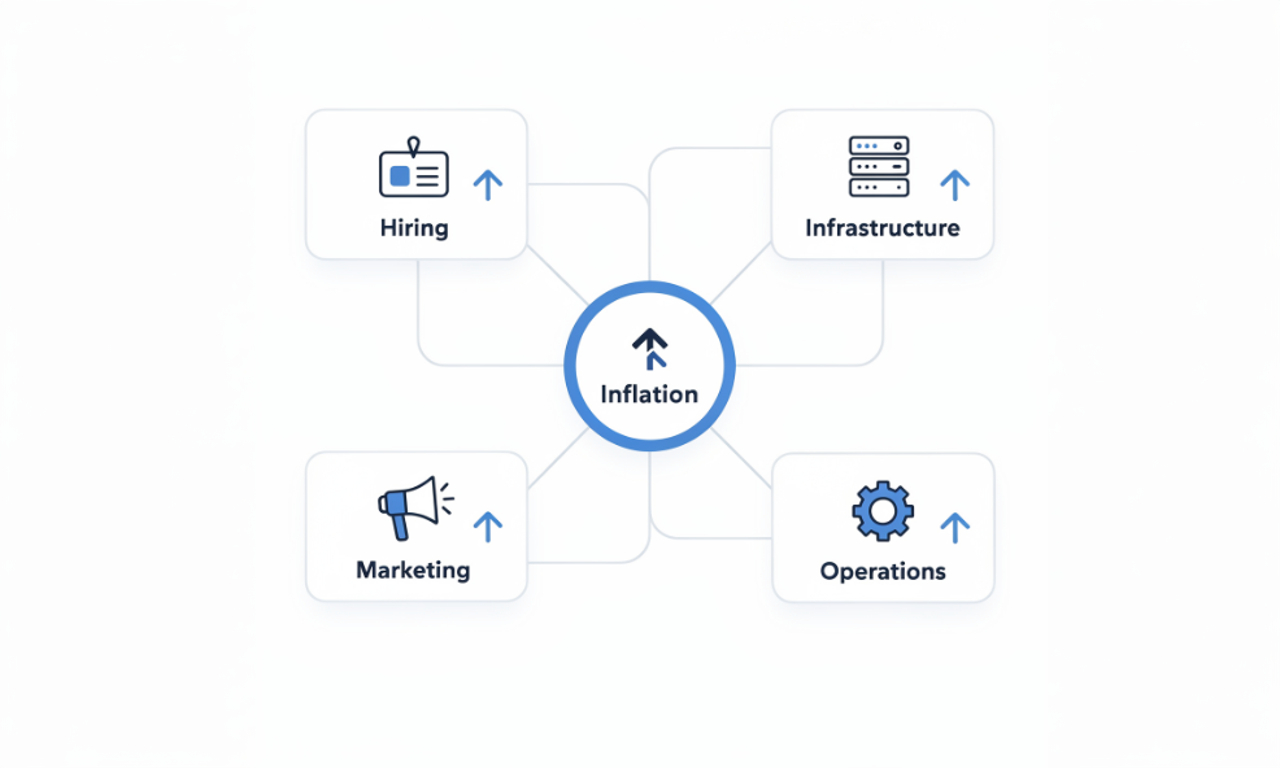
From what I’ve seen, the impact shows up in three predictable places.
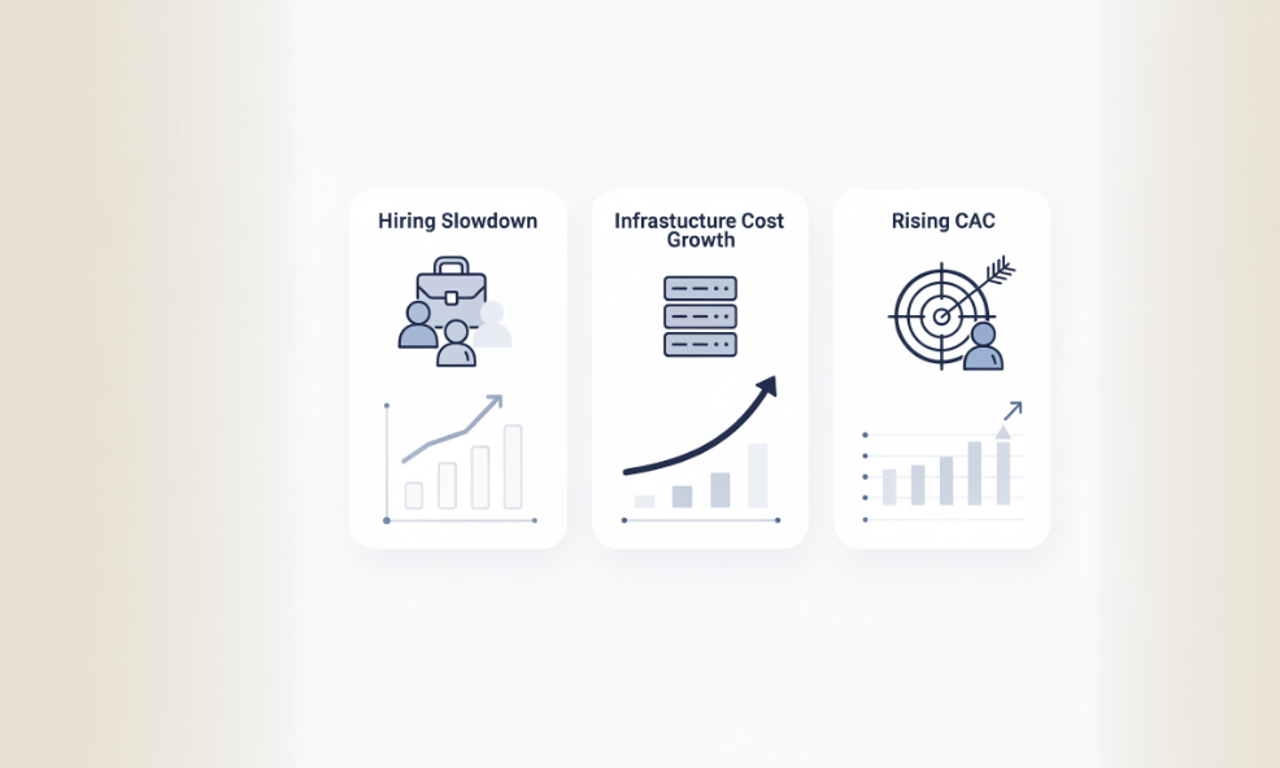
1. Hiring Slows Down Before Growth Does
Hiring used to be the default solution.
More work → hire more engineers.
But now:
- Salaries are higher
- Hiring cycles are longer
- Retention is harder
So instead of accelerating growth, hiring starts delaying it.
This creates a silent bottleneck most founders don’t immediately notice.
2. Infrastructure Costs Scale Without Permission
Cloud costs don’t spike overnight.
They creep.
Then compound.
Without strong architecture:
- Unused resources stay active
- Systems are overbuilt
- Costs grow faster than revenue
This is where many startups lose control, not because of traffic, but because of inefficiency.
3. Customer Acquisition Becomes Less Predictable
When inflation rises, everyone tightens budgets.
That affects you indirectly:
- Ads cost more
- Conversion rates drop
- CAC increases
So startups are forced into a tougher game:
Spend more → for the same result.
That’s when growth strategies start breaking.