- ODCs provide a cost-efficient way to access high-quality global talent.
- They allow businesses to scale their development teams quickly and flexibly.
- ODCs help reduce operational costs by leveraging offshore resources.
Offshore Development Center: How It Helps You Scale and Save Costs
Published on: 4 March 2026
Last updated on: 15 June 2026

You’re the CEO of a growing tech company. Your product is getting attention, your customer base is expanding, and everything seems on track.
But there’s one problem, you just can’t find enough talented developers to meet the demand. Local hiring is expensive and time-consuming. You’ve tried outsourcing here and there, but it’s not quite right—projects are delayed, communication is rocky, and you’re losing control over your vision.
Sound familiar? If you’ve ever tried to scale a tech company, you know the challenge. Growing a team with the right skills, within budget, and at the right pace feels almost impossible.
Here’s where an Offshore Development Center (ODC) comes in.
Instead of relying on expensive local hires or struggling with unreliable outsourcing, you can set up a dedicated team in another country—one that works just like your in-house team but with major cost benefits. You get the talent you need, the flexibility to scale, and the control you want over your projects, all without breaking the bank.
The best part? You’re not alone in this. Many companies are turning to ODCs as a proven way to overcome the same challenges. From cutting down on labor costs to accessing a larger pool of skilled professionals, the ODC model has become the go-to solution for businesses looking to grow without the high overhead.
But how does it all work? And why should you consider it for your business?
In this article, we’ll walk through the benefits of Offshore Development Centers, how they help companies scale efficiently, and how Mediusware can guide you through the process of setting one up.

What is an Offshore Development Center (ODC)?
An Offshore Development Center (ODC) is essentially a remote team that operates under the same guidelines and policies as your in-house team, but it’s located in a different country. This team focuses entirely on your company's projects, offering software development, front and back-end development, design, project management, QA & DevOps, UI/UX design, and other technical services.
Think of an ODC as an extension of your in-house team, but with the added advantage of being cost-efficient. You get access to high-quality talent without the high costs associated with local hiring. An ODC can range from a small team of developers to a larger, fully-staffed office that handles a wide range of tasks.
Here’s how it works:
- Dedicated Team: Your offshore team is dedicated to your business, working just like an in-house team. The only difference is they’re located in a country with lower operational costs.
- Flexible Staffing: Depending on your needs, you can scale your offshore team up or down. Whether you need more developers for a product launch or a team of designers for a new feature, an ODC makes scaling simple.
- Complete Control: Despite being located in a different country, you have full control over your ODC. You manage the projects, set deadlines, and ensure the team’s work aligns with your company’s goals.
Here’s FullScale's detailed guide, in case you're curious about the differences between onshore and offshore development, and how these models impact business operations.
In short, an ODC provides businesses with the flexibility, expertise, and cost-efficiency they need to scale their operations, all while staying in control of the development process.
Why Should You Consider an Offshore Development Center?
1. Cost Savings
Running a business is expensive, and finding ways to reduce costs without compromising on quality is always a top priority. That’s one of the main reasons why companies turn to Offshore Development Centers (ODCs).
By setting up an ODC in a country with a lower cost of living, businesses can significantly reduce their labor costs. Software development, in particular, tends to be one of the most expensive operations for tech companies. But with an offshore team, you can hire skilled developers at a fraction of the cost compared to local talent.
Additionally, ODCs help cut down on other operational costs. Expenses like office rent, utilities, and equipment tend to be much lower in offshore locations. This gives companies the opportunity to reinvest those savings into other areas, such as R&D, marketing, or expanding their team.
2. Access to Global Talent
Finding the right talent for your business can be a challenge. There’s often fierce competition for top-tier developers, especially in tech hubs where demand far outweighs supply. But with an ODC, you open the door to a global talent pool.
Countries like India, Poland, and Argentina have become well-known hubs for software development, offering a wealth of skilled professionals who can work on your projects. These professionals are not only highly qualified, but they also come with experience working on international projects, ensuring they are adaptable to different business cultures and technologies.
Whether you’re looking for full-stack developers, AI specialists, or cybersecurity experts, an ODC provides access to the specific skills your company needs—without the limitations of your local market.
3. Scalability and Flexibility
One of the biggest advantages of Offshore Development Centers is the ability to scale your team quickly and efficiently.
As your business grows, so do your development needs. Whether you need to ramp up efforts for a product launch or bring in a team of experts for a specialized project, an ODC allows you to scale up quickly without the lengthy hiring process that comes with building a local team. You can add developers or specialists as needed, and the ODC can adapt to your changing needs.
This flexibility also extends to the types of teams you can build. Whether you need a small, dedicated team or a large, diverse group of experts, an ODC can cater to your requirements, allowing you to maintain control over the size and scope of your team.
4. Faster Time-to-Market
In today’s competitive landscape, speed is everything. Getting products to market faster can be the difference between leading the market and falling behind. An ODC can help you achieve faster time-to-market by providing a dedicated, skilled team that focuses solely on your project.
With the ability to work around the clock, thanks to time zone differences, your projects can progress even when your in-house team is offline. This 24/7 development cycle leads to quicker turnaround times and allows you to meet deadlines without compromising on quality.

Setting Up an Offshore Development Center
Setting up an Offshore Development Center (ODC) may seem like a daunting task, but with careful planning and the right approach, it can be a smooth and highly rewarding process. Here’s a step-by-step guide to help you get started:
1. Define Your Needs and Goals
Before you start looking for locations or building your offshore team, it’s essential to define what you need. Ask yourself:
- What kind of development work will the ODC handle (e.g., software development, QA, design)?
- What are the specific skills or technologies you need expertise in?
- What are your goals for the ODC—are you focusing on cost reduction, scalability, or accessing specialized talent?
By answering these questions, you’ll have a clear idea of the team structure you need, the type of roles required, and the project scope that the ODC will focus on.
2. Conduct a Feasibility Study
A feasibility study helps assess whether an ODC is a viable solution for your business. It looks at key factors like:
- Cost and Budget: How much can you save by setting up an ODC in a specific country?
- Talent Availability: Is the required talent available in that region? What is the local skill pool like?
- Legal and Compliance: Are there legal regulations or compliance issues to consider when working in that country (e.g., labor laws, taxes, data protection)?
- Operational Risks: What are the risks involved (e.g., geopolitical stability, language barriers)?
Conducting a feasibility study will give you the data you need to make an informed decision about setting up an ODC.
3. Choose the Right Location
Location is one of the most important factors when setting up an ODC. Popular offshore locations like India, Eastern Europe, and Latin America offer skilled professionals at affordable rates. When choosing a location, consider:
- Talent Pool: Does the region have the skills and expertise your business needs?
- Language and Communication: Is English widely spoken, or will language barriers impact communication?
- Costs: What are the operating costs (salaries, office space, etc.) in that region?
- Political Stability: Is the country politically stable, and does it have a favorable business climate?
Picking the right location sets the foundation for your ODC’s success. Research your options carefully and choose a region that aligns with your needs.
4. Set Up the Infrastructure
Once you’ve chosen a location, you need to set up the necessary infrastructure. This includes:
- Office Space: Will you rent office space or partner with an ODC provider who offers office space as part of their services?
- Technology: Ensure that your offshore team has access to the right tools and technologies for smooth collaboration (e.g., development software, cloud infrastructure, project management tools).
- Security: Ensure your offshore team follows the same security protocols as your in-house team, especially if you’re dealing with sensitive data.
Some companies partner with offshore vendors who already have the infrastructure in place, saving time and effort.
5. Recruit and Build Your Team
The next step is to recruit the right talent for your ODC. You can either:
- Build your team: Hire your own recruitment team or work with local recruitment agencies to find the right candidates.
- Partner with an ODC provider: Many offshore development centers work with established vendors who can quickly assemble a team based on your needs. This saves time and ensures you get skilled professionals who are already vetted.
The key here is to focus on hiring individuals who not only have the right technical skills but also align with your company’s culture and values. Clear communication and strong team integration are critical to success.
6. Onboard and Integrate the Team
Onboarding your offshore team is essential for successful collaboration. Here’s how to do it effectively:
- Provide Training: Make sure your offshore team understands your company’s processes, tools, and workflows.
- Set Clear Expectations: Define roles, responsibilities, and goals clearly to avoid misunderstandings later.
- Foster Team Collaboration: Use collaboration tools like Slack, Zoom, or Trello to keep your teams connected and aligned. Regular meetings and feedback loops will help build strong working relationships between your in-house and offshore teams.
7. Establish Communication Channels
Effective communication is key to the success of any ODC. Set up clear communication channels to ensure that your teams work well together. Consider:
- Daily Stand-ups: Use daily stand-up meetings to check in on progress and tackle any challenges.
- Video Conferencing: Regular video calls help maintain personal connections and make it easier to discuss complex issues.
- Collaboration Tools: Use project management tools like Jira or Asana to track progress and manage tasks.
Having robust communication channels in place will help keep everyone on the same page, ensuring smooth collaboration across time zones.
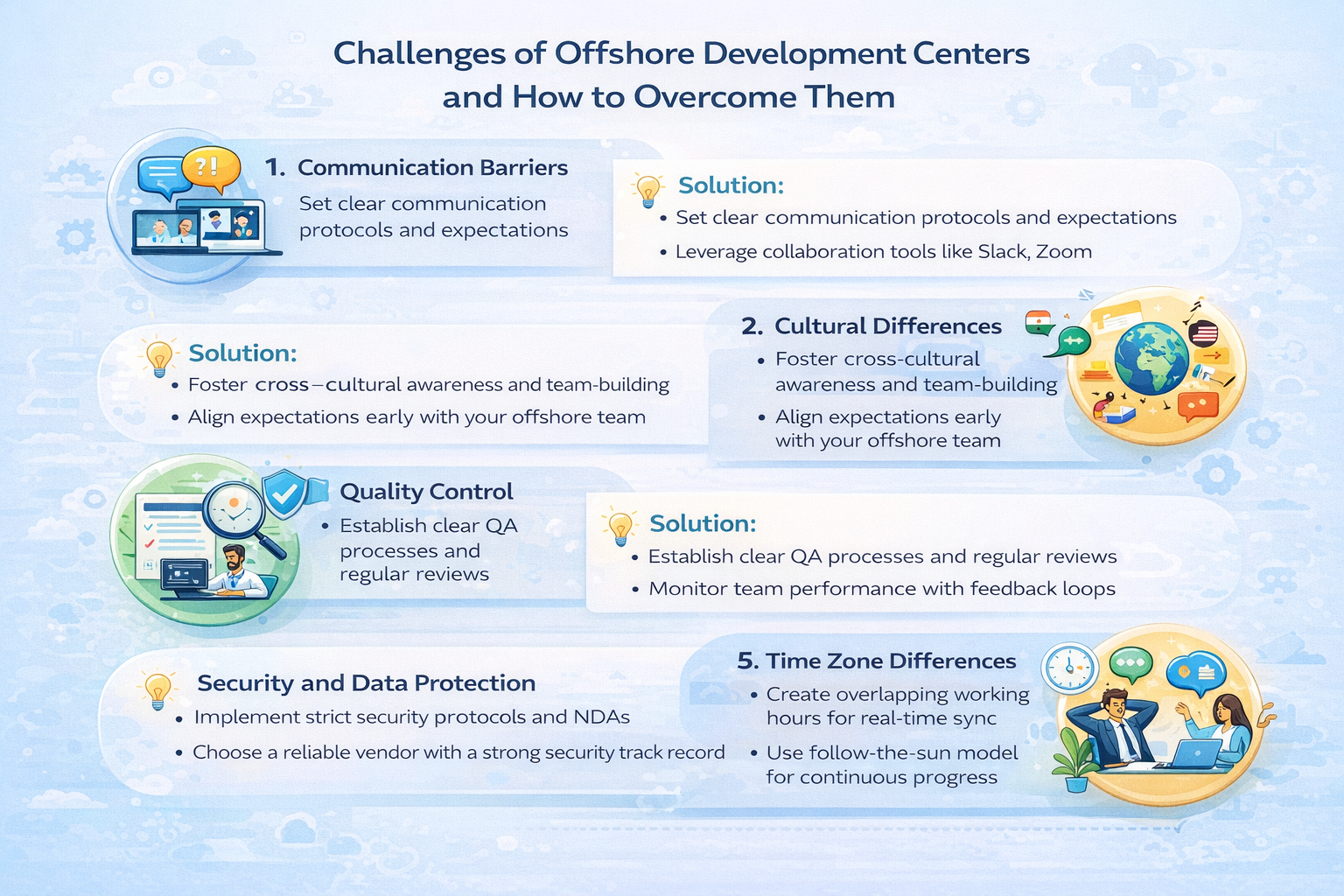
Challenges of Offshore Development Centers and How to Overcome Them
While Offshore Development Centers (ODCs) offer many advantages, they also come with their own set of challenges. Understanding these challenges and knowing how to address them will help you maximize the benefits of an ODC and ensure smooth collaboration. Here are some common obstacles and how to overcome them:
1. Communication Barriers
One of the most significant challenges in working with an offshore team is communication. Language differences, time zone mismatches, and cultural differences can create misunderstandings and slow down project progress.
Solution:
- Set Clear Communication Protocols: Establish clear expectations for communication—whether it’s daily stand-up meetings, weekly check-ins, or ad-hoc meetings for urgent issues. Use video calls for a more personal connection, and ensure that all team members understand the communication tools and expectations.
- Leverage Collaboration Tools: Tools like Slack, Zoom, or Microsoft Teams help bridge the communication gap, making it easier to stay connected across time zones. Project management tools like Jira or Trello also ensure that everyone is on the same page when it comes to tasks and deadlines.
2. Cultural Differences
Cultural differences can affect working styles, attitudes toward deadlines, decision-making, and conflict resolution. These differences can lead to misunderstandings if not properly managed.
Solution:
- Foster Cross-Cultural Awareness: Encourage team-building activities and training that help both in-house and offshore teams understand each other’s cultures. This builds trust and improves collaboration.
- Align Expectations Early: Be upfront about your expectations for work quality, deadlines, and communication. Discuss potential cultural differences and how they might affect the work dynamic.
3. Quality Control
Maintaining high standards of quality can be challenging when working with remote teams, especially if you don’t have direct oversight of day-to-day operations. This can lead to inconsistencies in the work produced.
Solution:
- Establish Clear Quality Assurance (QA) Processes: Implement regular code reviews, QA testing, and performance checks to ensure the work meets your standards.
- Monitor Performance: Use metrics such as productivity rates, bug fix times, and milestone completion to track the progress of your offshore team. Regular feedback loops will help keep quality consistent.
4. Security and Data Protection
When working with an offshore team, ensuring the security of your data and intellectual property can be a concern, especially when dealing with sensitive information.
Solution:
- Set Up Strong Security Protocols: Ensure your offshore team follows the same security protocols as your in-house team. Use secure communication channels, implement strict data access controls, and require non-disclosure agreements (NDAs) with all team members.
- Choose a Reliable Vendor: If you’re working with an ODC provider, ensure they have a strong track record of handling sensitive data securely.
5. Time Zone Differences
Time zone differences can make it difficult to collaborate in real-time, causing delays and frustration when urgent issues arise.
Solution:
- Overlap Working Hours: If possible, create overlapping working hours where both in-house and offshore teams are online at the same time. This allows for real-time collaboration and quicker problem-solving.
Use a Follow-the-Sun Model: With teams in different time zones, you can implement a "follow-the-sun" workflow, where the offshore team picks up where the in-house team left off, ensuring continuous development progress.
Conclusion: Is an Offshore Development Center Right for Your Business?
Offshore Development Centers (ODCs) are more than just a cost-saving strategy—they’re a powerful way for businesses to scale efficiently, access global talent, and maintain control over development processes. Whether you're a startup looking to expand your team quickly or an established enterprise seeking to optimize resources, an ODC can be the solution that drives your business forward.
By leveraging an ODC, you can:
- Save Costs: Hire top-tier talent at a fraction of the cost of local hiring.
- Access Global Talent: Tap into a vast pool of skilled professionals, no matter where they are located.
- Scale Quickly: Easily increase or decrease your team size based on your business needs.
- Ensure Quality: Maintain high standards through clear processes and communication.
- Stay Competitive: Speed up time-to-market and meet the demands of an ever-changing market.
If you’re ready to explore the benefits of an Offshore Development Center for your business, Mediusware is here to guide you every step of the way. With years of experience in building high-performance teams, we can help you set up a dedicated ODC that aligns with your goals.
Explore how Mediusware can help you build a high-performing Offshore Development Center tailored to your needs. Contact us today to get started!

I work with founders and leadership teams when growth moves faster than their systems, teams, or decisions. I’ve led 850+ projects for 750+ clients across 20+ countries, working across 100+ technologies and counting. I care about ownership, clarity, and building things that last beyond the launch.
Featureblogs
Relatedblogs
01
A Guide to Successfully Outsourcing Your Software Development Project in 6 Steps02
Smart Contracts vs. Regular Contracts03
SDLC vs Agile System Development: Phases, Pros and Cons, and Common Grounds04
Why Mediusware Limited is Your Perfect Global Outstaffing Partner05
10 Best B2B Software Companies in the USA for 2025 – Find Your Perfect Partner!Authorblogs
01
How to Choose an API Development Company for Your SaaS Product02
Why Software Companies Are Turning to Strategic Partnerships for Faster Growth03
Your SaaS Isn’t Slow Because of Developers It’s a Scaling Problem04
Why Some SaaS Companies Scale Faster Than Others05
AI vs Hiring: When Should SaaS Teams Automate Instead of Hiring?