- Open source speeds development but unmanaged dependencies create hidden risks that slow delivery.
- Governance with automation visibility and ownership helps teams ship faster with confidence.
Open Source Dependency Risk: How to Govern and Ship Faster
1 min read
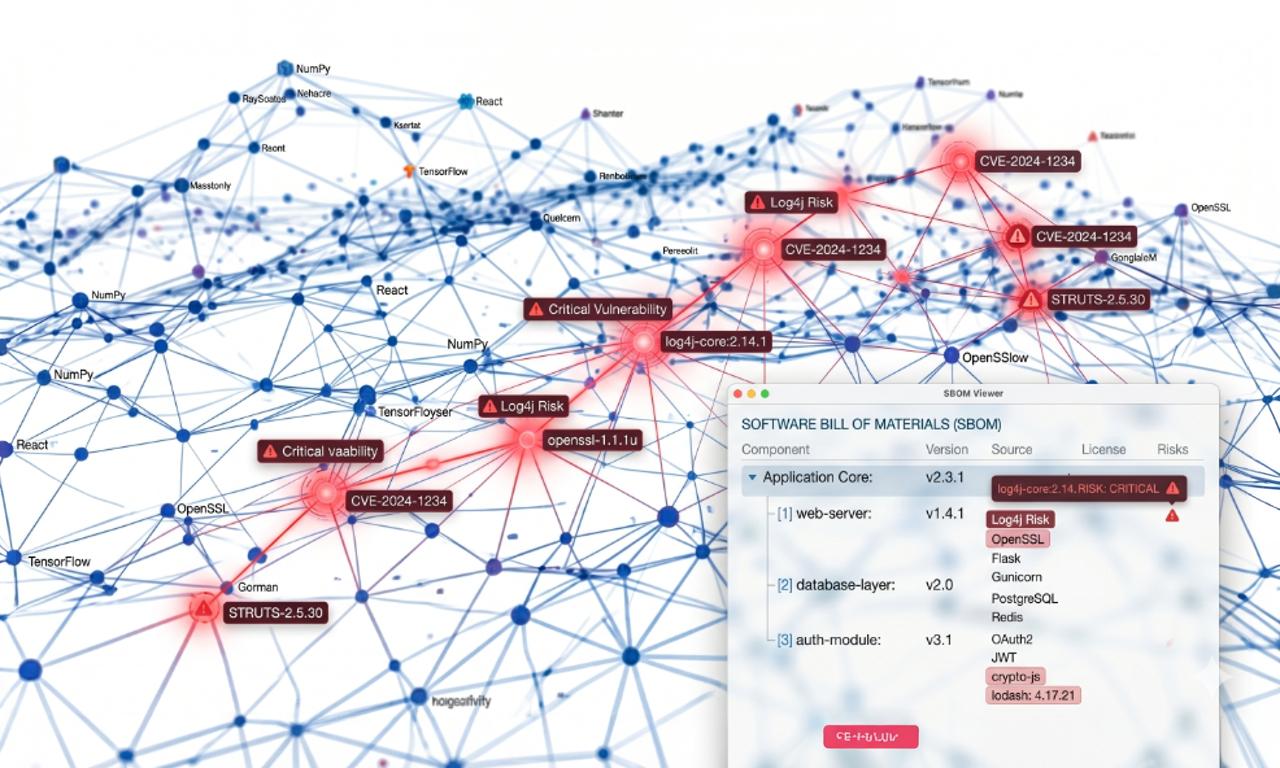
Open source didn’t fail.
What failed is how most teams manage it.
Your product today isn’t just your code. It’s hundreds of external dependencies quietly running inside your system.
And here’s the uncomfortable reality:
If you don’t know what’s inside your software, you don’t control it.
That’s not a security problem anymore.
That’s a delivery risk.
The Shift Most Teams Ignore
A few years ago, open source meant speed.
Today, it means accountability.
- Security is continuous, not periodic
- Compliance is mandatory, not optional
- Customers expect proof, not claims
- Audits require evidence, not explanations
As the Linux Foundation highlights,
Modern software is assembled, not written.
That changes everything.
Open source is now a software supply chain.
And unmanaged supply chains don’t scale.
Where Open Source Risk Actually Hides
Most teams don’t fail because of complex attacks.
They fail because of ignored basics.
| Risk Pattern | What It Looks Like | Business Impact |
| Known vulnerabilities | Delayed CVE patches | Breach + audit failure |
| Abandoned packages | No updates or maintainer | Long-term instability |
| Transitive dependencies | Hidden deep in dependency tree | Zero visibility |
| License conflicts | Copyleft in closed source | Legal risk |
| Repo compromise | Injected malicious code | Supply chain attack |
These are not rare problems.
They are predictable failures.
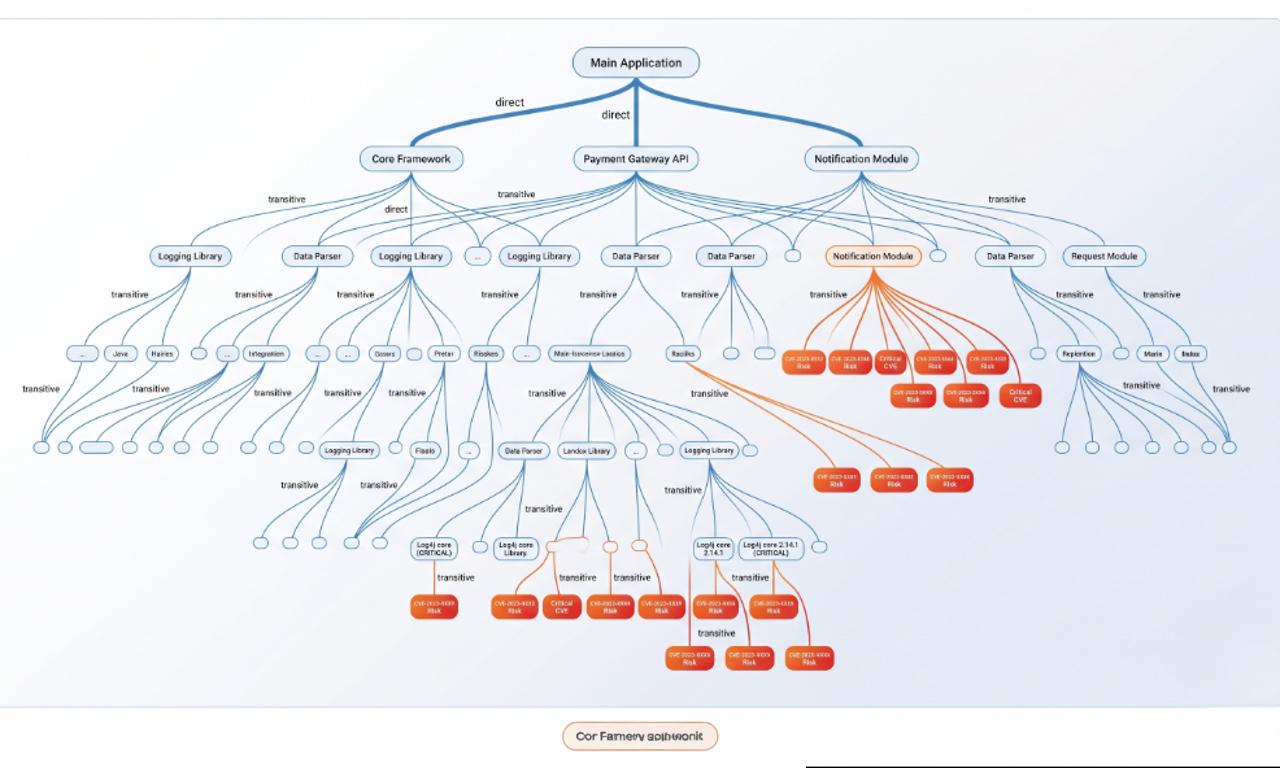
Why We’ll Fix It Later Breaks at Scale
A modern application doesn’t depend on 20 libraries.
It depends on hundreds or thousands when transitive layers are included.
That creates three real problems:
- Every release quietly increases risk
- Every audit becomes reactive firefighting
- Every incident takes longer to trace
According to a Sonatype State of the Software Supply Chain Report,
over 90% of modern applications contain open source components, and many include known vulnerabilities.
So this is not edge-case risk.
This is default architecture risk.
The Mental Model That Changes Everything
High-performing teams stop thinking like this:
Open source saves time.
They start thinking like this:
Open source is critical infrastructure.
That shift leads to:
- Ownership instead of assumptions
- Automation instead of spreadsheets
- Evidence instead of guesswork
Security stops slowing teams down
when it becomes part of how systems are built.
SBOM: The Baseline Most Teams Skip
You can’t secure what you can’t list.
A Software Bill of Materials (SBOM) is:
A complete inventory of all components, versions, licenses, and sources in your software.
Why it matters:
- Required for compliance (especially enterprise deals)
- Essential for fast incident response
- Expected by modern security standards
When a new vulnerability hits:
- Teams with SBOM → respond in minutes
- Teams without SBOM → start guessing
That gap becomes visible immediately.
Where Automation Actually Helps
Automation isn’t about replacing engineers.
It’s about removing manual noise.
Smart teams automate:
- Dependency scanning on every build
- License checks before merge
- SBOM generation inside CI/CD
- Policy enforcement as code
But they don’t automate judgment.
Human decisions still matter when:
- Business trade-offs are involved
- Exceptions need approval
- Risk impacts delivery timelines
The winning model is simple:
Automation detects. Humans decide.
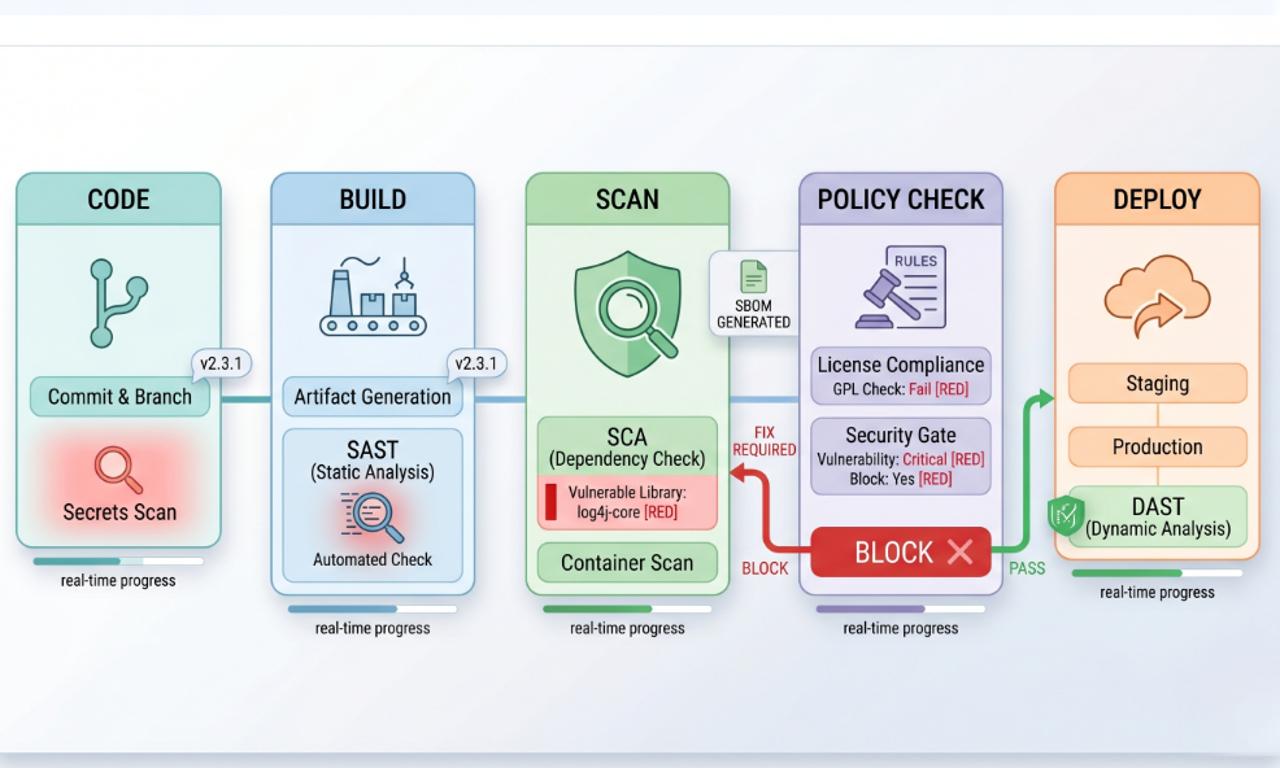
Speed vs Security Is a False Tradeoff
Most teams think security slows them down.
That only happens when it’s added too late.
When governance is built into the pipeline:
- Developers get feedback at commit time
- Fixes are smaller and faster
- Releases become predictable
In reality:
Good governance reduces rework, not speed.
Audit Readiness Without the Panic
Audits don’t fail because of complexity.
They fail because of missing evidence.
Strong teams already have:
- Logged scan results
- Signed build artifacts
- Traceable approvals
- Clear ownership
Nothing is rushed. Nothing is guessed.
It’s boring.
And that’s exactly what auditors want.
The Organizational Pattern That Works
The best-performing teams align early:
- Engineering
- Security
- DevOps / Platform
They share:
- Tools
- Standards
- Accountability
What changes:
- Security becomes part of engineering quality
- Developers stop resisting audits
- Leadership gets real metrics
This alignment is hard once.
Then it becomes your advantage.
What Governance Actually Improves
This isn’t just about risk reduction.
It directly impacts business outcomes:
| Outcome | What Improves |
| Incident response | Faster detention and containment |
| Release confidence | Fewer rollbacks |
| Audit cycles | Faster, smoother |
| Customer trust | Easier enterprise deals |
| Engineering focus | Less firefighting |
We’ve seen similar patterns on platforms like Lensix, where centralized visibility and automation significantly reduced security incidents and improved response efficiency.
That’s what happens when systems are designed, not patched.
What Good Open Source Governance Looks Like
At its best, it’s invisible:
- Developers work normally
- Risks surface early
- Exceptions are documented
- Evidence is automatic
Security becomes part of the system,
not something added later.
Final Takeaways
Open source is still the foundation of modern software.
But the advantage no longer comes from using it.
It comes from how you manage it.
Teams that build:
- Visibility
- Ownership
- Automation
…don’t just reduce risk.
They ship faster with confidence.
Frequently Asked Questions
It’s the risk from using third-party libraries you don’t fully control, including vulnerabilities, outdated packages, or license issues.

I work at the point where product decisions, system architecture, and engineering execution meet. At Mediusware, I’m accountable for how technology choices affect reliability, scale, and long-term delivery for our clients.
Featureblogs
Relatedblogs
01
How to Create a Stunning WordPress Website in 2024: Step-by-Step Tutorial02
How Mediusware Empowered Protesters, Strengthened the Economy & Showcased Employee Resilience in the 2024 Movement03
Mastering Error Handling in Rust with Essential Techniques04
Best Practices for Writing Clean Code05
Let's Deep Dive Into Threads with RustAuthorblogs
01
How Digital Agencies Can Deliver Custom Software Without Hiring Developers02
AI in FinTech: Build, Buy, or Integrate? A Founder's Decision Framework03
How to Choose a SaaS MVP Development Company04
How Seed-Stage SaaS Teams Add Engineering Capacity Without Hiring Chaos05
Why Seed-Stage SaaS Startups Struggle to Ship Fast