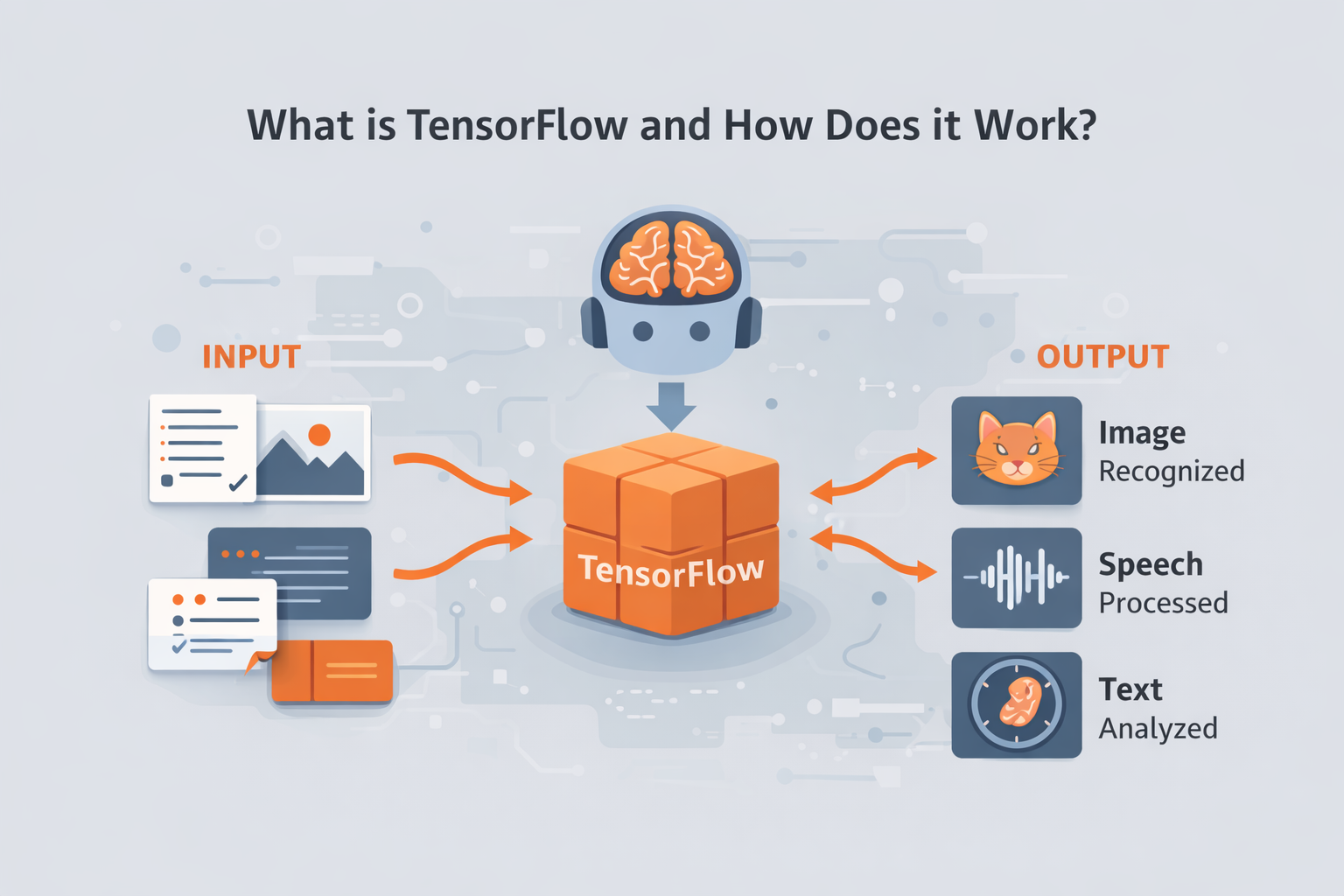
TensorFlow is used across many industries to solve complex problems and enhance everyday experiences. Here are a few key applications:
1. Image Recognition and Object Detection
TensorFlow is widely used in image recognition tasks. Google Photos, for example, uses TensorFlow to automatically categorize images and recognize objects, people, and even locations. TensorFlow’s ability to process and understand images makes it indispensable in industries like retail, security, and healthcare.
2. Voice Recognition and Natural Language Processing
Google Assistant and Siri both rely on TensorFlow for voice recognition and NLP. TensorFlow models are trained to understand spoken commands, providing users with accurate responses and actions. Whether it’s dictating a message or asking for the weather, TensorFlow helps voice assistants become smarter over time.
3. Predictive Analytics
TensorFlow is used to predict outcomes based on historical data. For example, it’s used in finance for stock market predictions, in healthcare for patient outcomes, and in retail for customer behavior analysis. By training models on large datasets, TensorFlow enables businesses to make data-driven decisions.
4. Autonomous Vehicles
Self-driving cars use TensorFlow to process real-time data from sensors, cameras, and LiDAR to navigate roads and make driving decisions. TensorFlow’s ability to quickly process large amounts of data helps these vehicles recognize objects, avoid obstacles, and make split-second decisions.
5. Healthcare Diagnostics
TensorFlow is being applied in healthcare to help diagnose diseases by analyzing medical images, detecting anomalies, and predicting health risks. For instance, TensorFlow is used to analyze X-rays, CT scans, and MRIs to detect signs of diseases like cancer or pneumonia.